
Organization models
Describes how to work with categorization of organizations in the Customer Management system in Optimizely Commerce Connect.
Categorize organizations into types, such as Organization or Organization Unit (for example, regional branches and departments) or business categories, such as Computers and Electronics, or Clothing and Accessories.
Use organizations to group user permissions and limit access to Optimizely Commerce Connect subsystems. See Authorization and authentication for information about permissions and organizations.
Business-to-consumer (B2C) model
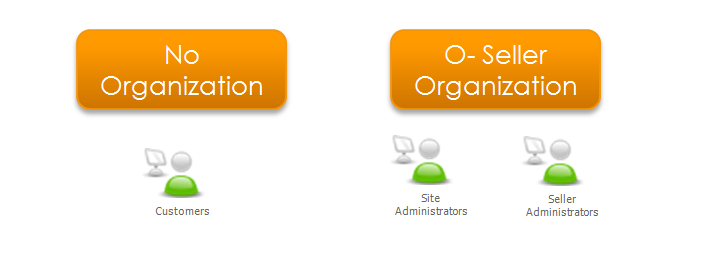
Seller organization
A seller organization is created to own all the catalogs (Retailer) and the administrators who maintain the store. The administrators who maintain the store's functions (for example, customer service representatives, catalog and product managers) are termed Seller administrators and are owned directly by the Seller organization.
Business-to-business (B2B) model
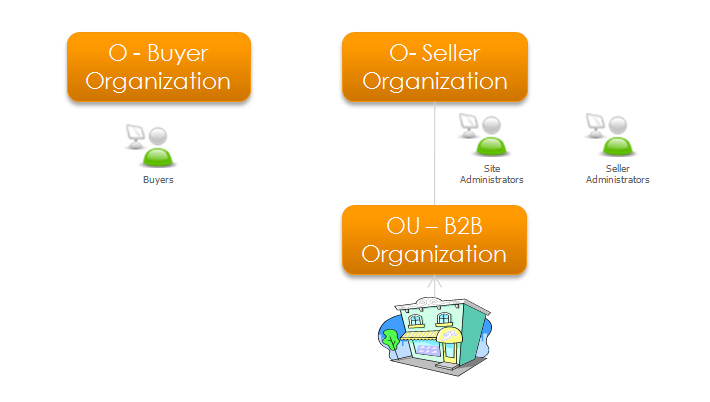
Buyer organization
Customers, known in B2B direct businesses as buyers, are represented by a buyer organization in the B2B organization structure. Users who belong to buyer organizations must register under their respective organizations.
Seller organization
A seller organization is created to own the organizations that own catalogs. The administrators who maintain the store's functions (customer service representatives, catalog, and product managers) are termed seller administrators and belong directly to the seller organization. A child organizational unit (OU), B2B organization, is created under the seller organization to own the store (Business).
Updated 2 months ago